Background and Context
“Black Like Me: How International Engagements Shape Educators’ Diasporic Awareness and Perceptions of Practice,” uses a longitudinal mixed methods design to examine how international exchanges and global studies in educator preparation programs influence educators’ perceptions of their practice, especially in relation to teaching students of the African diaspora.
While there are quite a number of studies on global education in teacher preparation, few, if any, have used mixed and longitudinal methods to understand the impact of educator preparation to help us better understand the mechanisms which advance diaspora literacy. This five-year project will support two interrelated studies:
an international survey of educators’ backgrounds, their beliefs about “diaspora,” and their perceptions of their professional practice, and
a longitudinal qualitative analysis of four cohorts of HBCU educators. The survey analysis will use latent class analysis to investigate educators differences using a person-centered method and a qualitative cohort study will explore the attitudes, awareness, and beliefs about educating children of the African diaspora.
The project findings will inform a set of research modules, studies on Black internationalization, and a collaborative open source diasporic project, Black Like Me, that will support diaspora literacy.
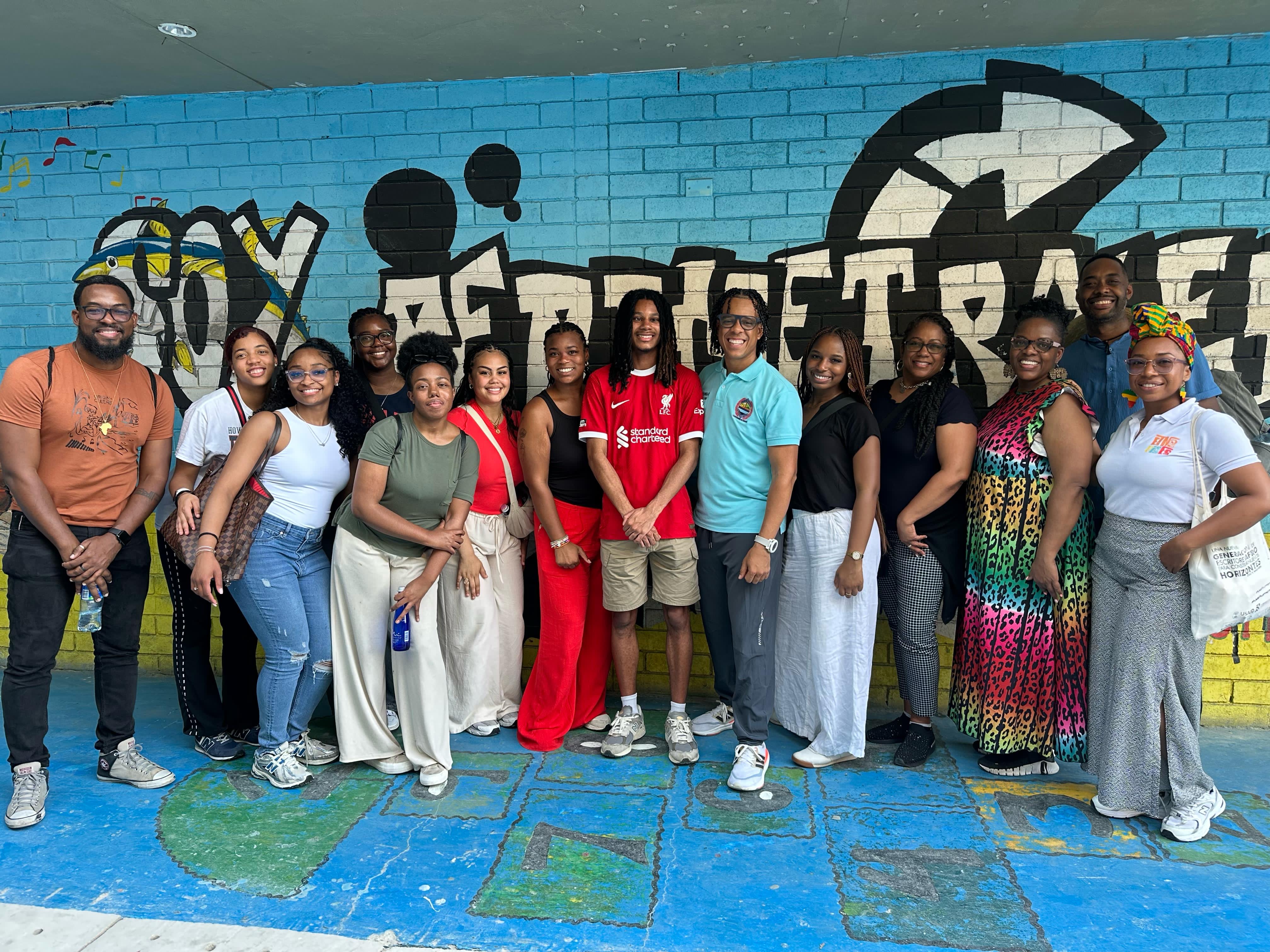
Project Goals and Objectives
The concept of diaspora, especially within the African diaspora, encompasses shared histories, cultural connections, and experiences of displacement that inform identity and practice. Recent scholarship (Edwards, 2001; Zeleza, 2009; Urrieta, 2016) elaborates this as an evolving understanding shaped through multiple geographies and sociopolitical contexts. While existing literature addresses globalization in teacher education and racialization, there is limited focus specifically on diaspora literacy and the transnational realities influencing educators’ approaches to practice (Apple, 2011; Howard & Rosario, 2000; Mensah, 2022; Wallace et al., 2021).
To advance the literature in this area, this project has the following objectives:
Recruit diverse cohorts of pre-service and in-service educators for multi-year survey and narrative data collection.
Utilize mixture modeling and thematic analyses to identify distinct educator profiles and evolving narratives related to diasporic knowledge and practice.
Engage partner institutions, especially HBCUs, in collaborative research-practice partnerships that promote diaspora-informed teacher education.
Design a collaborative, open-source platform that supports educators, researchers, and practitioners in advancing diaspora literacy and culturally responsive pedagogy.